Residental Lavasan
Lavasan
Tehran
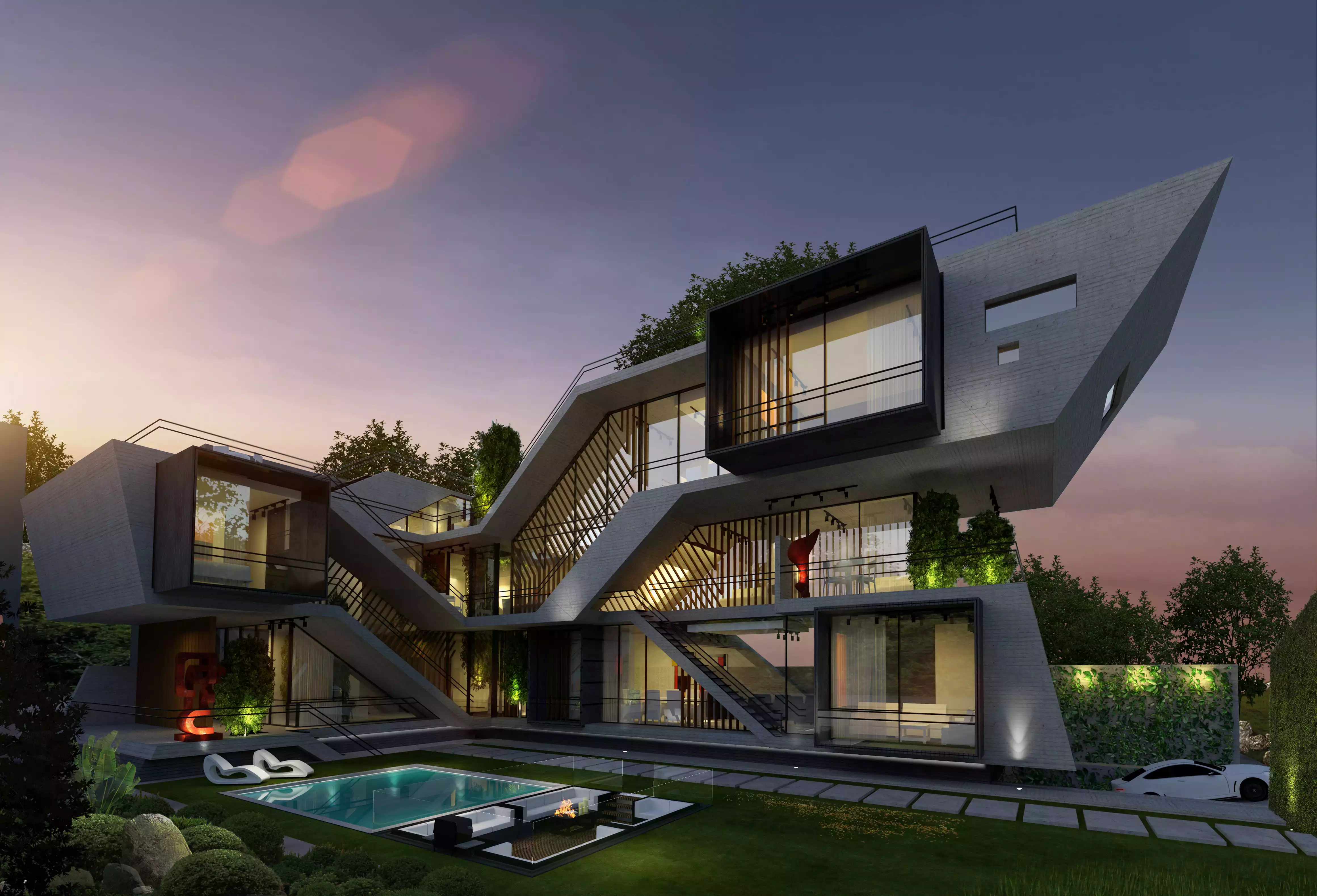
The Lavasan Family Villa was commissioned by an extended family consisting of the parents and the families of their two sons. The core idea of the project is to reinterpret the traditional logic of historic Iranian family mansions in a contemporary architectural language—where each family maintains its own privacy, while high-quality shared spaces foster togetherness, hospitality, and collective living
The spatial organization is based on the metaphor of intersecting circles:
-
Each “circle” represents an independent family unit and private domain
-
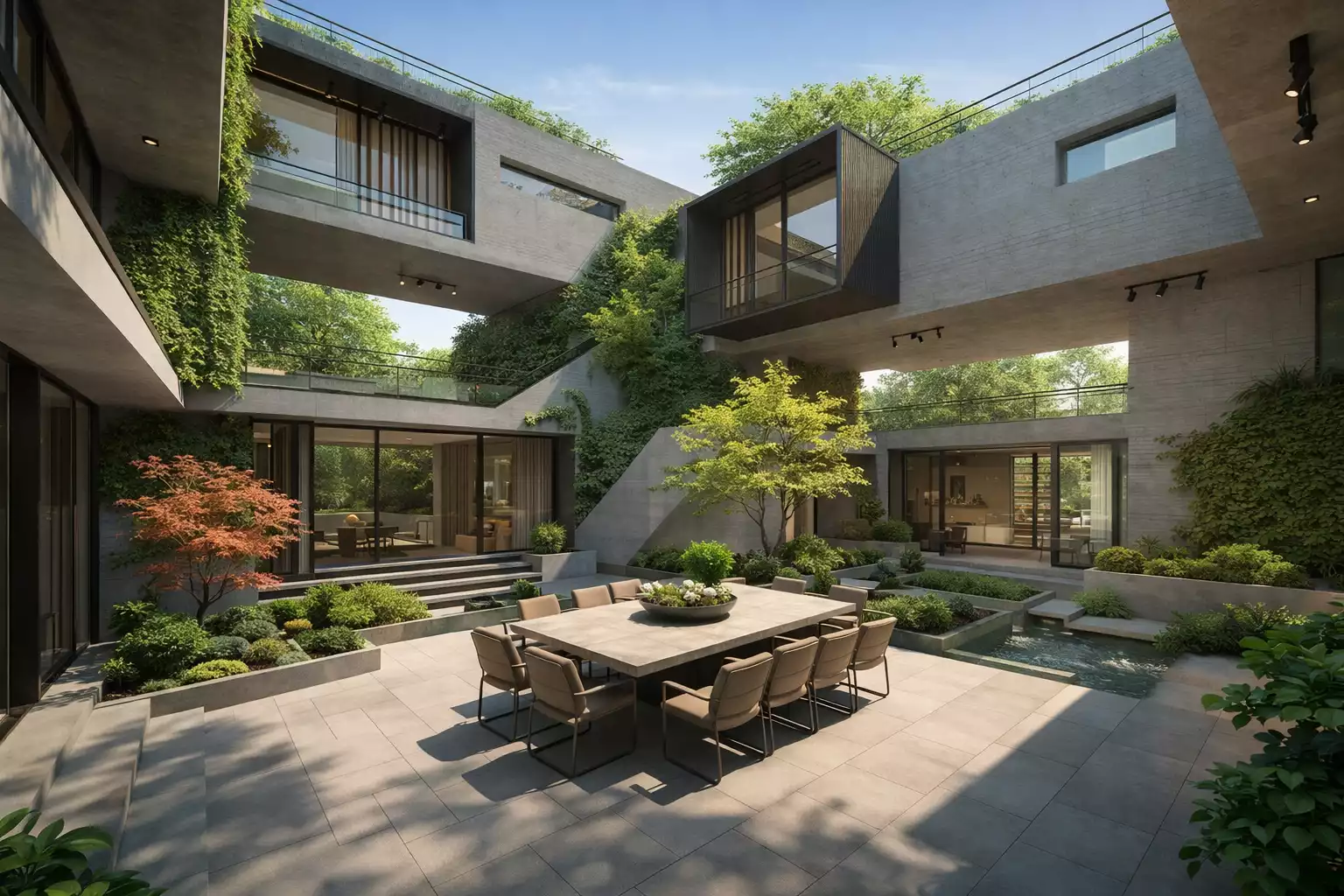
The “intersection point” becomes the social heart of the villa—shared spaces such as the central courtyard, gathering areas, and communal living zones that connect the different family wings
This approach balances independence and connection, creating a unified yet layered living environment.
Form and Architectural Expression
The villa is composed of distinct yet interconnected volumes, carefully positioned through controlled rotations and prominent cantilevers. This volumetric composition serves two primary purposes:
Ensuring Privacy Through Spatial Separation:
Private residential zones are positioned in separate wings and at varying levels, minimizing visual overlap and functional interference between family units.
Creating a Legible Shared Center:
At the intersection of these volumes, a central shared space emerges as a spatial node—where circulation, light, views, and social interaction converge. This transforms the project from a collection of separate units into a cohesive family estate.
The architectural language is defined by a dynamic and contemporary spatial approach:
-
Diagonal staircases and ramps act as a continuous “spatial ribbon,” providing circulation while also filtering views
-
Terraces and green roofs at multiple levels enhance environmental performance and strengthen the connection between interior and exterior
-
Framed openings and deep windows regulate light and views, while adding depth and human scale to the overall mass
Spatial Organization and Functional Distribution
Private Wings:
Located at higher or more distant levels, these areas provide independent living environments for each family, ensuring privacy and comfort.
Shared Spaces:
Positioned at the intersection of the volumes, these areas accommodate gatherings, hospitality, and collective family life.
Courtyard and Landscape:
The outdoor environment—including the pool and landscaped areas—acts as a natural extension of the shared spaces, creating visual continuity and reinforcing the villa’s connection to its garden setting.
Material Strategy and Façade Expression
The material palette reinforces the contrast between solidity and lightness:
-
Primary volumes expressed in exposed concrete or light-colored stone, conveying permanence and structural clarity
-
Darker secondary elements, such as glass or metal volumes, emphasizing suspended and cantilevered forms
-
Linear louvers and layered façade elements providing solar control, privacy, and environmental performance
-
Large transparent surfaces maximizing visual connection to the natural landscape of Lavasan and enhancing daylight penetration
Conclusion
The Lavasan Family Villa is an architectural reinterpretation of a deeply rooted Iranian living model—multi-family life organized around shared communal spaces—translated into a contemporary spatial and formal language. By clearly separating private domains into independent wings while establishing a central shared core, the project recreates the essence of a family estate. Through cantilevered volumes, dynamic circulation elements, green terraces, and layered façades, the villa achieves a distinct architectural identity while fostering both privacy and collective living